
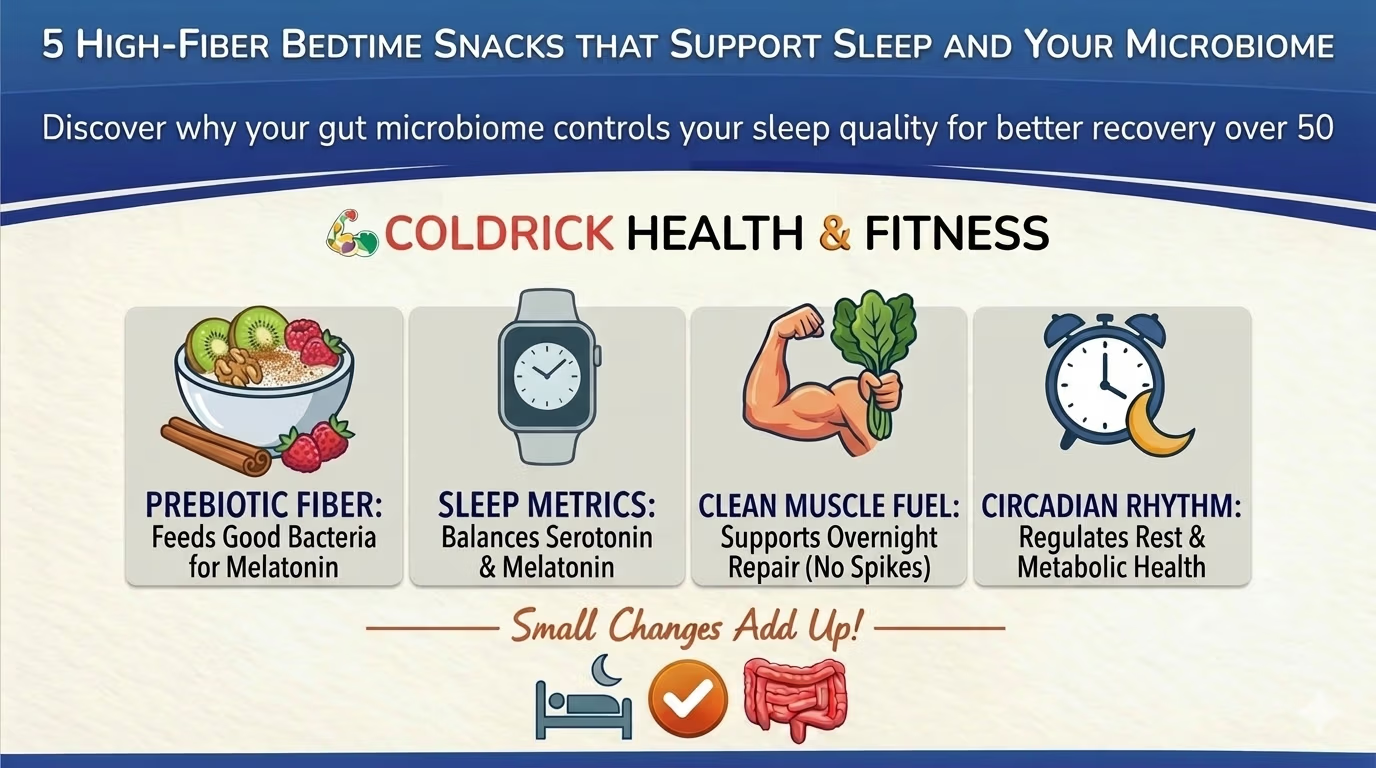
5 High-Fiber Bedtime Snacks That Support Sleep and Your Microbiome
Fuel Your Gut Bacteria and Relax Your Nervous System Without Spiking Insulin
Why What You Eat at 8:00 PM Determines How You Feel at 8:00 AM
We’ve all dealt with it: it’s 8:30 PM, you’re winding down for the night, and you start feeling a bit hungry. The easy move is to grab some crackers or something sweet, but those refined sugars are a double-edged sword. They spike your insulin and disrupt the very gut bacteria you need for a restful night.
As someone who focuses on longevity and metabolic health, I want to see you wake up feeling recharged, not sluggish. For those of us over 50, sleep isn’t just “rest”—it’s when our bodies repair muscle and clear out the cognitive fog.
Choosing a snack high in magnesium and prebiotic fiber can actually act as a “nightly tune-up” for your biology.
In this post, I’m sharing 5 high-fibre bedtime snacks that can help you improve your sleep and gut health.

Why Your Gut Microbiome Controls Your Sleep Quality
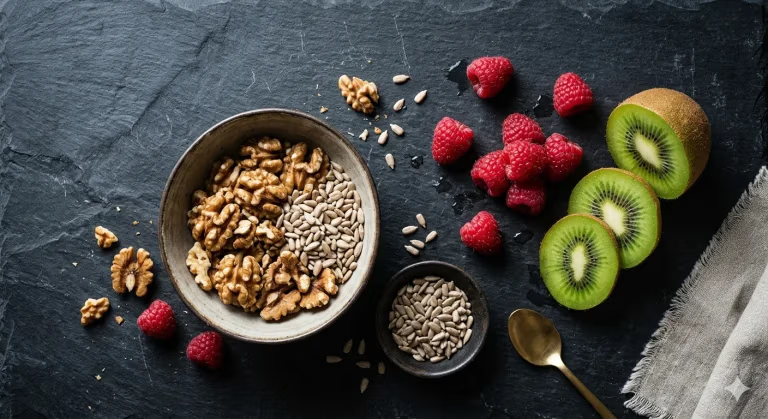
Before we dive into the list, it is important to understand the connection between your gut and your rest. Your gut bacteria produce a significant portion of your body’s neurotransmitters, including serotonin, which is a precursor to the sleep hormone melatonin.
By eating high-fiber, low-sugar snacks before bed, you are feeding the “good” bacteria that help regulate your circadian rhythm. This “Win-Win” approach ensures you aren’t just sleeping—you’re recovering.
My Top 5 Nightly Wins for Your Sleep & Gut

-
Roasted Sunflower Seeds
These are a staple for me. They're loaded with magnesium to relax your muscles and tryptophan to support melatonin production. -
Kiwi Fruit (with the skin)
It sounds unconventional, but the skin holds the fiber your gut needs so eat the skin. I do. Kiwis are a natural source of serotonin to help you drift off faster. -
A Small Bowl of Large-Flake Oats
These feed the "lean-body" microbes in your gut while helping sleep nutrients reach your brain. -
Walnuts & Raspberries
Walnuts are one of the few whole foods that naturally contain melatonin. Pair them with high-fiber raspberries for a low-sugar treat. -
A Slice of Aged Cheese
A piece of good aged cheddar or Swiss provides probiotics and the calcium your brain needs to process tryptophan.
The "Nightly Cleaning Crew": Your Gut’s Essential Maintenance System
Most people think digestion is a passive process, but your gut is actually most active when it’s empty. About 90 to 120 minutes after your last bite, a specialized physiological process called the Migrating Motor Complex (MMC) kicks in.
Think of the MMC as a high-powered pressure washer for your small intestine. It triggers a series of rhythmic waves that sweep through your digestive tract, clearing out:
Undigested food particles that can ferment and cause bloating.
Excess bacteria that might otherwise migrate into the small intestine (potentially leading to SIBO).
Cellular debris and waste that builds up throughout the day.
The 7:00 PM “Shift Change”
Here is the critical part: The MMC only works in the “fasted” state. The moment you eat—even a small “healthy” snack—the MMC immediately shuts down so your body can focus on digestion.
If you eat right up until bedtime at 9:00 PM or 10:00 PM, your “cleaning crew” never gets the signal to start their shift. This is why you might wake up feeling “heavy,” bloated, or lacking an appetite in the morning.
By finishing your Nightly Win by 7:00 PM, you give your body the 2-hour window it needs to finish digesting before you sleep. This allows the MMC to run multiple “cleaning cycles” overnight, repairing your gut lining and ensuring you wake up with a metabolic “clean slate” at 6:00 AM.


How These Snacks Support Long-Term Weight Loss
Unlike processed crackers or cookies, these whole-food options have a low glycemic index. This means they won’t cause a massive spike in blood sugar, allowing your body to remain in “fat-burning mode” even while you sleep. Additionally, the fiber content keeps you feeling full until your morning fast is complete, supporting your time-restricted eating habits perfectly.
Take the Next Step Toward Vitality
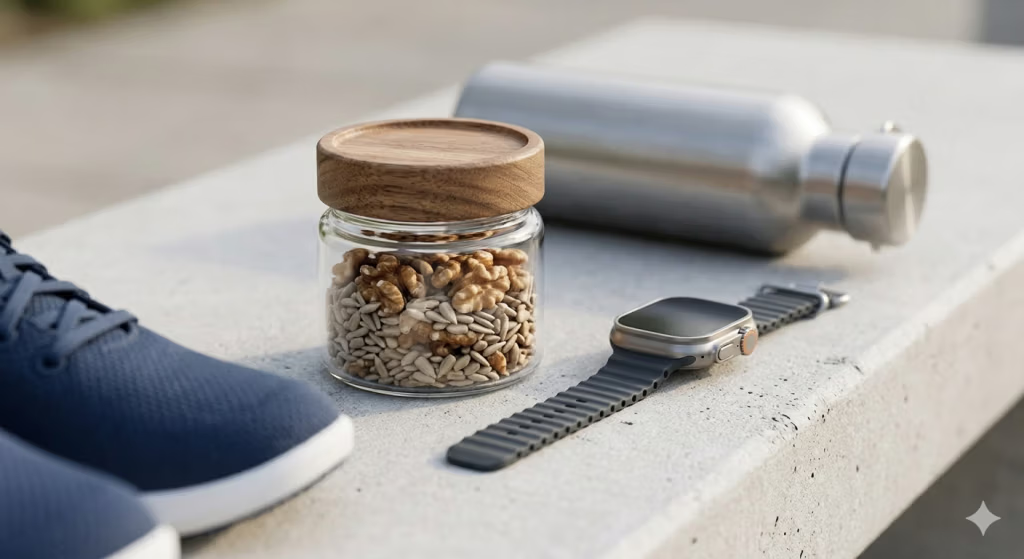
Understanding what to eat is only half the battle; knowing how your lifestyle habits—like meal timing and sleep hygiene—interact with your biology is where the real transformation happens.
If you’re ready to stop guessing and start seeing results in your sleep data and your waistline, let’s talk. I offer Lifestyle Synchronization coaching designed specifically for the unique metabolic needs of those over 50. We don’t just count calories; we optimize your biology.
The Science Behind the Choice
I am a firm believer in the research of experts who study how our daily habits sync with our internal biology. Their work proves that our evening choices dictate our morning energy.
Dr. Satchin Panda is a world-leading expert in circadian rhythm research at the Salk Institute. His work highlights how timing our nutrition is the key to maintaining a healthy metabolism as we age:
“Your gut has a clock. When we eat late-night refined sugars, we disrupt the microbes that regulate our metabolism. Choosing fiber-rich, low-glycemic snacks in the evening helps ‘set’ your internal clock for fat-burning and deep repair.” > — Dr. Satchin Panda, Author of The Circadian Code
While timing is the foundation, the quality of that snack determines your hormonal response. Jessie Inchauspé, a French biochemist and bestselling author known as the “Glucose Goddess,” explains why avoiding a sugar spike is critical for a restful night:
“Spiking your blood sugar right before bed is a recipe for a restless night. By choosing snacks with fiber and healthy fats—like walnuts or seeds—you keep your glucose steady, allowing your body to focus on sleep instead of managing an insulin spike.” > — Jessie Inchauspé, Author of Glucose Revolution
By choosing these plant-based, fiber-rich “Nightly Wins,” you aren’t just satisfying a craving; you’re programming your biology for a better tomorrow.
Expert Insights: Your Nightly Sleep & Gut Questions
Won't eating fruit like Kiwi right before bed spike my blood sugar?
Because kiwis are high in fiber (especially if you eat the skin and you should!), the natural sugars are absorbed much more slowly than refined snacks. This prevents the “insulin spike” that can disrupt sleep and lead to fat storage.
I'm not a big fan of sunflower seeds. Is there a nut-based alternative?
Absolutely. Pumpkin seeds (pepitas) are an excellent substitute. Like sunflower seeds, they are rich in magnesium, which helps relax the nervous system and muscles before you head to bed.
Is it okay to eat these snacks if I usually stop eating by 7:00 PM?
If you are practicing time-restricted eating, it is always best to finish your last calorie within your window. However, if you find yourself genuinely hungry or unable to sleep, choosing one of these high-fiber, low-glycemic options is the “smartest” way to break a fast without sabotaging your metabolic progress.
How much of these snacks should I actually be eating?
Think “handful,” not “bowlful.” The goal isn’t a full meal; it’s a small, nutrient-dense signal to your brain and gut that it’s time to rest. For cheese or walnuts, a 1-ounce serving is usually the perfect “Nightly Win.”
Should I pair these snacks with a cup of herbal tea?
While relaxing, I recommend finishing most fluids by 7:00 PM. For those of us over 50, a full cup of tea at bedtime often leads to a 3:00 AM bathroom trip, which breaks your deep sleep cycle. If needed, stick to a few small sips of water with your snack.
Does the water in a kiwi cause mid-night bathroom trips?
A kiwi is about 80% water, but at only 60ml per fruit, it’s far less liquid than a 250ml cup of tea. However, if you have a sensitive bladder, the natural acidity in kiwi can sometimes be a trigger. If you find yourself waking up at 3:00 AM, try switching to walnuts or sunflower seeds instead, as they provide the same sleep benefits without the extra fluid or acidity.
Protecting Your Weight Loss Progress

If you’re working on staying lean, these options are ideal because they have a low glycemic index. They won’t cause the insulin spike that tells your body to store fat overnight. Instead, they keep your blood sugar stable, making your morning fast much more successful and keeping your metabolism in “fat-burning mode.”
I know how much noise there is out there regarding nutrition and fitness. My goal is to help you cut through that confusion with a plan that actually fits your life and your biology.
I possess a Healthy Eating & Weight Loss Coach certificate, I’m here to help you master the fuel your body needs. And because I’m also a Certified Personal Training Specialist, we can ensure your movement and exercise are perfectly synced with your nutrition to help you feel your absolute best at 50 and beyond.
Final Thoughts
Transitioning to a high-fiber, gut-friendly lifestyle isn’t about being perfect every single night. It’s about making a series of “small wins” that add up to a significant shift in how you feel when your feet hit the floor in the morning.
I’ve been practicing time-restricted eating for over five years now, and I’ve learned that the “hunger” we feel at 8:00 PM is often just our body looking for a bit of comfort. By choosing one of these five options, you aren’t just “cheating” a craving—you are strategically fueling your microbiome to work for you while you sleep. Start with one change this week—maybe it’s the sunflower seeds or the kiwis—and pay close attention to your energy levels the next day. Your gut (and your alarm clock) will thank you.

Disclaimer
This article reflects my personal experience and is not medical advice.
Recommended Resources
About the Author
John Coldrick, B.Sc., founded Coldrick Health & Fitness out of a deep commitment to seeing his clients succeed.
He is a certified Personal Training Specialist through canfitpro and also holds a Healthy Eating & Weight Loss coaching certificate from the same organization.
Based in Sundance, Calgary, John’s coaching is defined by the genuine care he has for those he serves.
He combines his scientific background from the University of New Brunswick with a hands-on approach to help the 50+ community build sustainable habits and maximize their longevity through data-driven tools like the Apple Watch.
John's Favorite Products
Transparency is key to my coaching. I personally use and discover value in these products before recommending them. If you purchase through the links below, I may earn a small commission that helps support this site at no extra cost to you.
The Kitchen Workhorse
I love this knife!
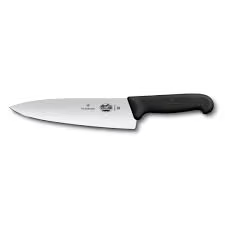
The Victorinox Fibrox 8″ Chef’s Knife is arguably the most cost-effective tool for anyone starting a healthy eating journey. While it doesn’t have the flashy look of expensive forged steel, its performance is legendary among professional chefs for its ergonomic grip and razor-sharp edge.
I’ve owned this knife for at least 5 years, and it’s my favorite. It’s light, sharp, and well balanced, and the non-slip grip makes the knife feel safe in my hands.
This is my go-to knife when preparing vegetables for the stir-frying.
Best For: All-purpose chopping, slicing, and dicing of dense vegetables.
Key Feature: The non-slip Fibrox handle ensures safety even when your hands are wet—a common occurrence when prepping fresh produce.
Maintenance: It is incredibly easy to hone and sharpen, making it a “forever” tool if treated well.https://amzn.to/4bbqtFG
John’s Discovery Tip
I’ve discovered that having one truly sharp (actually, I have 2 of these) reliable knife makes the difference between enjoying meal prep and dreading it. I prioritize this specific Victorinox because it’s a ‘workhorse’—it’s affordable enough to be your first ‘real’ knife, but high-quality enough that you’ll still be using it ten years from now.
I discovered this knife from a America’s Home Kitchen review. They loved this knife and so do I!
Get a Free Consultation Call
Start your transformation today. Claim your free, no-obligation session and discover your personalized health results now!