

My LDL Spiked Despite a Clean Diet: How Returning to Resistance Training Fixed the Trend
Summary
After years of steady progress, my LDL cholesterol took an unexpected turn upward.
Despite maintaining a strict plant-based diet, my “bad” cholesterol rose—proving that nutrition is only half the battle.
By re-prioritizing resistance training alongside my power walks, I successfully guided my LDL from 3.56mmol/L back down to 3.24mmol/L.
Alberta Health recommends a normal LDL range of below $3.50mmol/L, and this recent shift has successfully brought my levels back into the healthy zone.
The Mystery: When a "Perfect" Diet Isn't Enough
For years, my annual medical exams were a point of pride.
My doctor would review my lipid panel, see the downward trend in my LDL, and congratulate me on the results of my plant-based lifestyle.
But last year, the trend snapped.
My LDL had climbed to 3.56mmol/L, and I was concerned.
I hadn’t changed my diet; I was still diligent about fiber and healthy fats.
I asked my doctor, “How could this be? I haven’t changed my diet at all.”
He pointed to the missing variable: activity. Specifically, I had significantly decreased my usual volume of resistance training.

The Science: Why Muscle Matters for Your Heart
In Canada, heart health is often equated strictly with “cardio.” However, the Heart & Stroke Foundation of Canada notes that total physical activity—including strength work—is vital for lipid metabolism.
Muscle tissue is metabolically active. Think of your muscles as a “metabolic sink” for glucose and lipids. When you challenge your muscles, you stimulate enzymes (like lipoprotein lipase) that help move LDL from the blood to the liver for processing.
For me, losing that “strength engine” meant my body wasn’t clearing cholesterol as effectively, regardless of how clean my meals were.

The Fix: A Flexible Home-Based Routine
1. Resistance Training at Home
You don’t need an expensive gym membership to protect your heart. I returned to a focus on using free weights.
Resistance training is essential because muscle tissue is metabolically active; it improves how your body handles fats. Whether you have a dedicated space or just a pair of dumbbells in the living room, the goal is to challenge the muscle to protect the cardiovascular system.
2. Intentional Movement in Fish Creek Park
Living next to Fish Creek Park, I enjoy the trails and nature. To ensure I’m actually “power” walking, I use an arbitrary benchmark of 100BPM (beats per minute). If my heart rate drops below that, I increase my intensity or pace.
Note: For a fit individual in their early 60s, 100 BPM is a solid “Zone 1” or light “Zone 2” effort. It’s high enough to trigger metabolic benefits while remaining sustainable for long-duration cardiovascular health.
3. The Pure Joy of the Mountains
I also made sure to keep skiing in the mix.
While it offers physical and mental benefits, the primary reason I head to the slopes is the immense joy it brings me.
The fact that skiing requires total focus—a high-stakes form of mindfulness where you must stay “in the moment” to navigate safely—is a wonderful bonus.
When you’re having that much fun, the health benefits almost feel like an afterthought.
The Proof in the Numbers
While everyone’s body responds differently, returning to a balanced routine made a measurable difference in my own markers:
3.56mmol/L
Clean Diet / Low Activity
3.24mmol/L
Clean Diet + Resistance Training
That represents a 9% reduction in LDL. I didn’t have to restrict my diet further; I just had to put the work back into my muscles to bring myself comfortably back below the Alberta Health recommendation of 3.50 mmol/L.
Note: Individual results vary. These values represent my personal health journey using the methods discussed in this article.
Final Thoughts
Lowering my LDL wasn’t about finding a “flaw” in my plant-based diet; it was about acknowledging that as we age, our bodies require a more complete approach to health. While nutrition provides the fuel, resistance training provides the engine that keeps our metabolism running efficiently.
Seeing my numbers drop from 3.56 mmol/L back into the healthy range of 3.24 mmol/L (comfortably below the Alberta Health recommendation of 3.50 mmol/L) was a vital reminder that we are never “done” with our fitness journey. We simply adapt.
Whether it’s the quiet focus I find on a Tuesday afternoon at Fish Creek Park or the pure, unadulterated joy of a perfect ski run down a mountain, movement is the best medicine we have.
If you’ve been diligent with your diet but aren’t seeing the results you want in your bloodwork or your energy levels, I encourage you to look at the “Strength Variable.”
You don’t need to spend hours in a commercial gym to protect your heart. You just need a plan that respects your lifestyle, your age, and your goals.
I Can Help
Achieving your health goals shouldn’t feel like a mystery or a second job. Whether you are looking to improve your heart health markers, increase your energy, or simply feel stronger in your daily life, I am here to provide the roadmap.
As a certified Personal Training Specialist and Healthy Eating & Weight Loss coach, I help people over 50 bridge the gap between “eating well” and “living strong.” Here is how we can work together to synchronize your lifestyle:
Customized Resistance Training: We’ll build a sustainable, at-home routine using free weights that fits your schedule and protects your joints.
Healthy Eating Strategies: We will optimize your plant-based or Mediterranean-style nutrition to ensure your body has the fiber and nutrients it needs to thrive. You don’t have to be entirely plant-based. I consume poultry and seafood occasionally.
Apple Watch Integration: If you own or plan to purchase an Apple Watch, I will show you how to turn it into a powerful health partner—tracking the metrics that actually matter for your longevity.
The Joy Factor: We’ll find the “Fish Creek Park” in your own life—the activities that bring you genuine happiness while keeping you moving.
Ready to find your “Missing Variable”?
Let’s have a conversation about your goals and how we can achieve them together without spending a fortune on high-end gym memberships.
Disclaimer
This article reflects my personal experience and is not medical advice.
Recommended Resources
1. Understanding Your Numbers
- MyHealth Alberta: High Cholesterol Overview – This is the primary landing page for Albertans. It covers why LDL matters and links to the Heart Disease Risk Calculator used by Alberta doctors.
- AHS Nutrition Guideline: Heart Health – This is a great PDF resource from AHS that specifically mentions resistance training (on page 2) as a lifestyle intervention to improve your lipid profile, which perfectly backs up your blog’s message.
2. The Power of Strength Training
- Harvard Health: Stronger Body Healthier Heart?
Spending as little as half an hour each week on strength-building exercises is linked to a lower risk of premature death from heart disease.
- Heart & Stroke Foundation of Canada: How much physical activity do you need? – This is the gold-standard Canadian resource. It explicitly recommends adding muscle-strengthening activities at least two days per week and notes that weight training can even reverse muscle weakness.
About the Author
John Coldrick, B.Sc., founded Coldrick Health & Fitness out of a deep commitment to seeing his clients succeed.
He is a certified Personal Training Specialist through canfitpro and also holds a Healthy Eating & Weight Loss coaching certificate from the same organization.
Based in Sundance, Calgary, John’s coaching is defined by the genuine care he has for those he serves.
He combines his scientific background from the University of New Brunswick with a hands-on approach to help the 50+ community build sustainable habits and maximize their longevity through data-driven tools like the Apple Watch.
John's Favorite Products
Transparency is key to my coaching. I personally use and discover value in these products before recommending them. If you purchase through the links below, I may earn a small commission that helps support this site at no extra cost to you.
The Ultimate Kitchen Sidekick: The Instant Pot
I use our Instant Pot multiple times a week
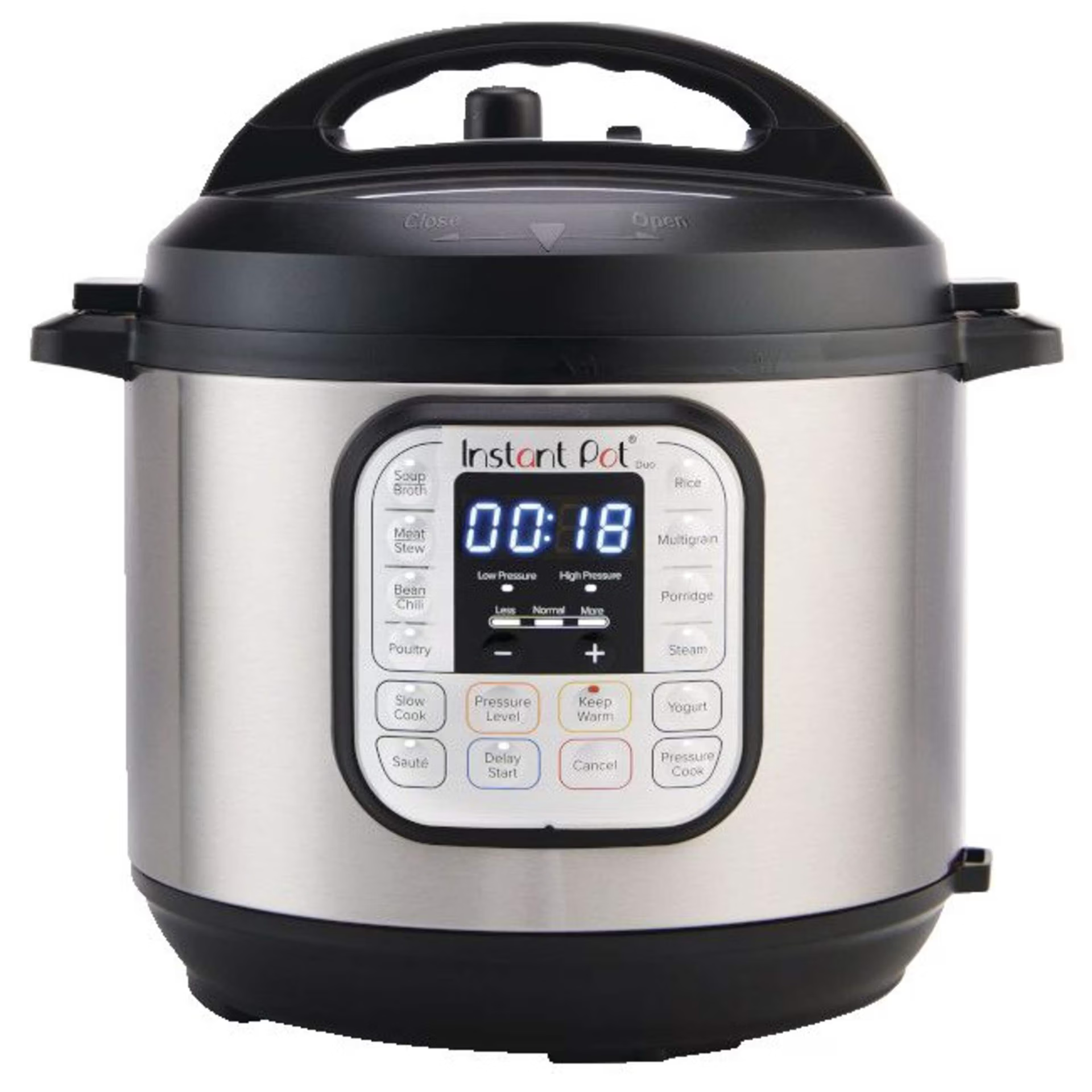
If you are looking for one tool to transform your kitchen efficiency and support your nutrition goals, look no further than the Instant Pot. This multi-cooker is effectively seven appliances in one, serving as a pressure cooker, slow cooker, rice cooker, yogurt maker, steamer, sauté pan, and food warmer.
It is particularly indispensable for those focusing on whole, plant-based foods. You can achieve perfectly fluffy rice or quinoa in minutes, and its “Sauté” function allows you to bloom spices and sear aromatics for rich Indian curries before switching to pressure cooking for a deep, slow-cooked flavor in a fraction of the time.
Key Features for Your Healthy Lifestyle
Custom Yogurt Function: The dedicated yogurt button makes it incredibly simple to create your own probiotic-rich soy or dairy yogurt at home. It handles the incubation temperature perfectly every time.
One-Pot Soups & Curries: The “Soup/Broth” setting ensures clear, nutrient-dense stocks and tender legumes without you needing to monitor a boiling pot on the stove.
Speed and Efficiency: It cooks up to 70% faster than traditional methods, making it easier to stick to your nutrition plan even on busy weeknights.
Safety and Simplicity: With over 10 built-in safety features, including overheat protection and a secure locking lid, it offers a true “set-it-and-forget-it” experience.
John’s Discovery Tip
The first time I used this was to cook brown rice. And I quickly discovered it was a perfect example of “set it and forget it.”
It was a Christmas present that I had not expected. I had heard many great things about the Instant Pot, and I was curious if the unit matched all of the hype. On YouTube I saw multiple videos where people had given up many of their kitchen appliances and replaced them all with the Instant Pot.
This seemed a little extreme but I was intrigued.
I set the cook time to 15 minutes, and I let it do a 10-minute “natural release” after the 15 minutes had expired.
The rice came out preferctly. Never did I have to bother looking to see how much water was left in the pot—or anything.
Set it and forget it.
I then tried making yogurt. After a few batches I discovered I prefer setting the timer for 24 hours. That produced the thickest yogurt. I let it cool down for another couple of hours before bottling the yogurt in mason jars.
Now I was hooked.
I then experimented with curries and soups. Many turned out wonderfully.
8-Quart vs. 6-Quart
I started using the 8-quart-sized Instant Pot but then switched to a 6-quart unit. I still use the 8-quart for larger dishes, but the 6-quart has been my go-to unit.
Sometimes I noticed the 8-quart unit would display a “burn” error code when food was stuck to the bottom.
John’s Pro Tip: To avoid the “burn” code, always deglaze the bottom of the stainless steel pot. After sautéing your onions or spices, add a splash of water or broth and scrape up any browned bits with a wooden spoon before locking the lid to pressure cook. Put extra effort into this. I clearly had not done a well enough job at deglazing.
Get a Free Consultation Call
Start your transformation today. Claim your free, no-obligation session and discover your personalized health results now!